Thursday, July 21, 2011

T.R. Tough


Theodore Roosevelt was campaigning in Milwaukee, WI on October 14, 1912 on the Bull Moose ticket. A man made his way through the crowd and shot T.R. in the chest. Roosevelt rather calmly checked his mouth for blood. Finding none, he realized the bullet did not pierce a lung. He made his way to the podium and gave a 90 minute speech with blood dripping from his shirt. The speech began with, "Ladies and gentlemen, I don't know whether you fully understand that I have just been shot; but it takes more than that to kill a Bull Moose."

What saved Roosevelt from greater harm? The bullet went through a steel eyeglass cases and his single-folded, 50 page speech. The ricochet off those two objects caused the bullet to lodge (as T.R. asserted) just short of his lungs. The bullet was not removed but did cause health problems for Roosevelt later in life.

I figure now was the time to share this story as I have heard it twice in two days. I am reading and really enjoying E.L. Doctorow's Ragtime which mentions the event and the story was featured on the latest edition of History Detectives as part of a T.R. war club investigation.

Monday, July 11, 2011

A Capitol Trim


The plot of land that was to become Washington D.C. was chosen by George Washington himself. Our first President selected a site on the Potomac River that was a near perfect diamond shape encompassing the ports of Georgetown and Alexandria (parts of Maryland and Virginia). Then why does the D.C. of today look as though someone took a bite out of it? Well, because someone did.

It's a term we don't use very often; retrocession or the process of donating land back to its original owners. In the 1830's, Alexandria County (the part of D.C. southwest of the Potomac) was struggling financially. One of its main businesses was the slave trade. Rumors were circulating that abolitionists in Congress were starting to talk about outlawing the slave trade in the district. This would be catastrophic to the southern end of the city. So in 1840, residents of Alexandria petitioned for the retrocession of the land south of the Potomac to Virginia. The state legislature approved the petition in February of 1846. Congress followed suit in June and Alexandria County was returned to Virginia as the city of Alexandria. Washington's diamond officially lost two of its points.

I picked up this story on the History Channel's, "How The States Got Their Shapes."

Tuesday, July 5, 2011

Independence Day Fun


More fun from the National Archives and the Don't Know Much blog.

-Jefferson is the principle author of the Declaration of Independence with assistance from Franklin and Adams. The latter's edits were incorporated into the final version.

-The D of I was actually passed on July 2nd. Whoops.

-The D of I was signed over the course of a month. The famous painting of each signer coming up to the desk is not true.

-Hancock's signature is not so large because he wanted the king to be able to read it without his glasses. It's because he was the first to sign.

-With the exception of Hancock, everyone's signature is placed geographically to the state he represented.

-The D of I has traveled around quite a bit. Most interestingly to an unused gristmill in Virginia during the War of 1812.

-Reese Witherspoon is a direct descendent of declaration signer John Witherspoon.

Thursday, June 9, 2011

All those robes

Here's a first for Stories of America. Video! I came upon this video from Yahoo!'s Who Knew series. It's all about graduation regalia. Right in time for graduation season. This information is not specific to America, but the information provided has certainly become a piece of academic Americana. For example, not mentioned is the famed Cavalier cap worn by UVA Ph.Ds.


Sunday, May 29, 2011

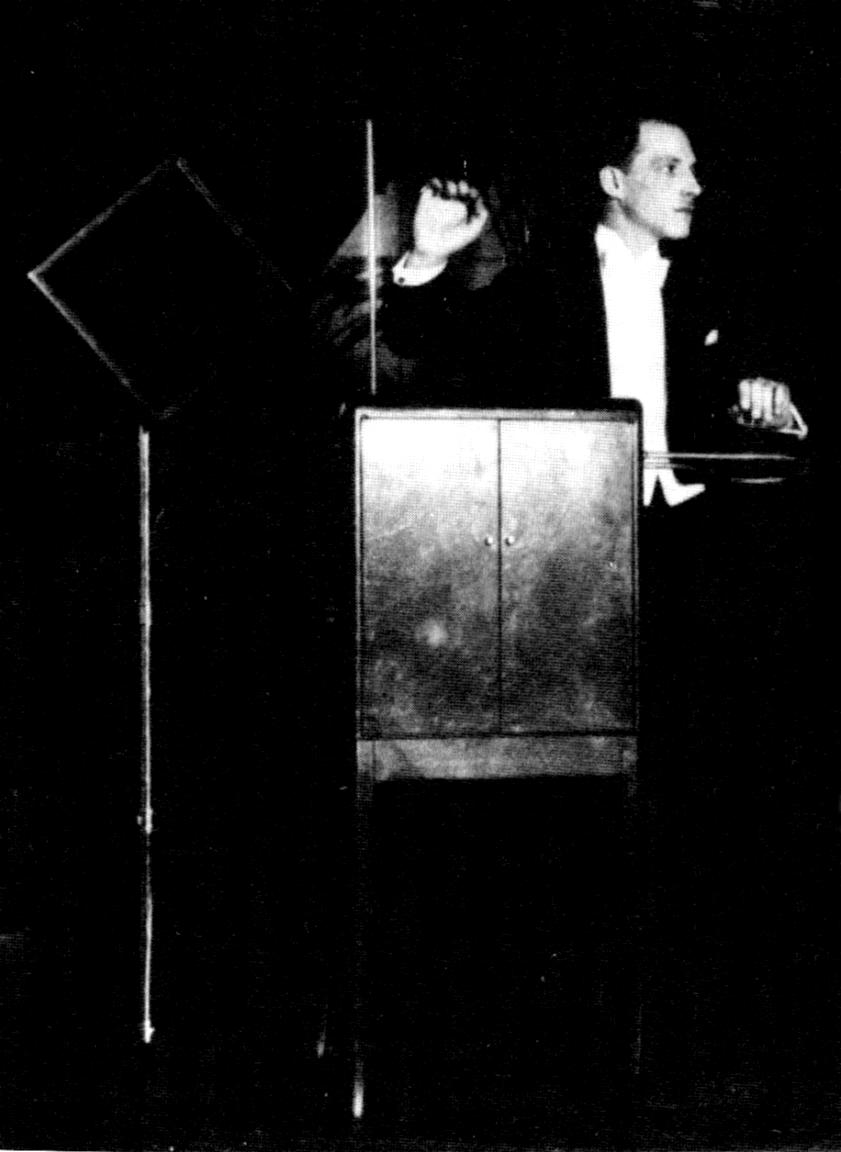
Theremin Fever


In the 1930's, America was taken by storm by a Russian musical instrument called the theremin. The theremin was one of the first electronic instruments and was invented by Leon Theremin. A user could control the volume and pitch of the instrument by placing his/her hands at different spots between two metal poles. Moving your hands changed the sound because different positions interrupted the electric flow at different points. The theremin was considered one of the easiest instruments to play but one of the hardest to play well.

During the late 20's and early 30's, Theremin was sent on an international tour by the Soviet government to promote his instrument. It worked as the concept was picked up by RCA for a considerable sum. The ulterior motive for Theremin's visit is where this story takes a strange twist. The Soviets successfully used Theremin as a spy. His contract with RCA gave him some interesting insight on many of their more strategically useful projects.

In 1945, Theremin created a secret listening device called The Thing. The Thing was placed in a wood carving of the Great Seal of the United States and presented to the U.S. Ambassador as a "gesture of friendliness" by a group of Soviet schoolchildren. The bugged seal sat in the ambassador's office for seven years before being discovered by the CIA. It later became a key piece of evidence in the hearings following the U-2 incident.