Showing posts with label 20th century. Show all posts

Thursday, July 21, 2011

T.R. Tough


Theodore Roosevelt was campaigning in Milwaukee, WI on October 14, 1912 on the Bull Moose ticket. A man made his way through the crowd and shot T.R. in the chest. Roosevelt rather calmly checked his mouth for blood. Finding none, he realized the bullet did not pierce a lung. He made his way to the podium and gave a 90 minute speech with blood dripping from his shirt. The speech began with, "Ladies and gentlemen, I don't know whether you fully understand that I have just been shot; but it takes more than that to kill a Bull Moose."

What saved Roosevelt from greater harm? The bullet went through a steel eyeglass cases and his single-folded, 50 page speech. The ricochet off those two objects caused the bullet to lodge (as T.R. asserted) just short of his lungs. The bullet was not removed but did cause health problems for Roosevelt later in life.

I figure now was the time to share this story as I have heard it twice in two days. I am reading and really enjoying E.L. Doctorow's Ragtime which mentions the event and the story was featured on the latest edition of History Detectives as part of a T.R. war club investigation.

Sunday, May 29, 2011

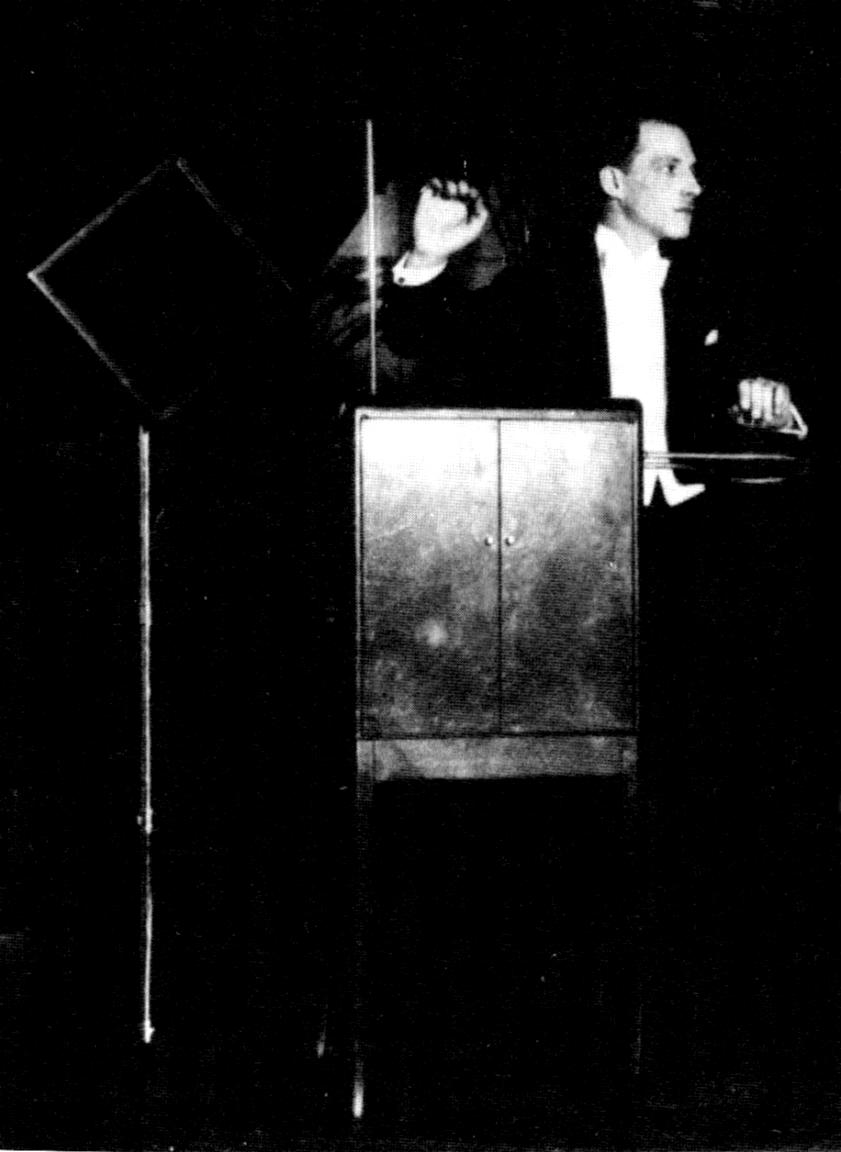
Theremin Fever


In the 1930's, America was taken by storm by a Russian musical instrument called the theremin. The theremin was one of the first electronic instruments and was invented by Leon Theremin. A user could control the volume and pitch of the instrument by placing his/her hands at different spots between two metal poles. Moving your hands changed the sound because different positions interrupted the electric flow at different points. The theremin was considered one of the easiest instruments to play but one of the hardest to play well.

During the late 20's and early 30's, Theremin was sent on an international tour by the Soviet government to promote his instrument. It worked as the concept was picked up by RCA for a considerable sum. The ulterior motive for Theremin's visit is where this story takes a strange twist. The Soviets successfully used Theremin as a spy. His contract with RCA gave him some interesting insight on many of their more strategically useful projects.

In 1945, Theremin created a secret listening device called The Thing. The Thing was placed in a wood carving of the Great Seal of the United States and presented to the U.S. Ambassador as a "gesture of friendliness" by a group of Soviet schoolchildren. The bugged seal sat in the ambassador's office for seven years before being discovered by the CIA. It later became a key piece of evidence in the hearings following the U-2 incident.

Sunday, April 3, 2011

The Tale of the Frisbee


Just about everyone has one lying around the house even if it's a knock off. The Frisbee is as American as apple pie. The story behind the toy is quite interesting.

It all begins in 1938 when Walter Fredrick Morrison and his girlfriend were offered 25 cents for a cake pan they were throwing back and forth. Morrison could get cake pans for 5 cents so he saw a business opportunity.

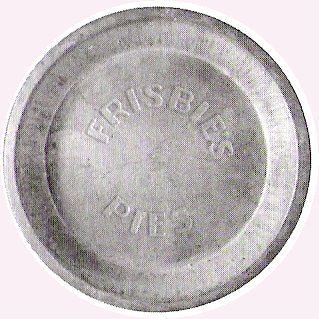
The "flying disc" phenomenon was a byproduct of the 1950's UFO craze. Morrison and his business partner began marketing their new and improved discs as the Flyin-saucer. In 1957, Morrison sold his product to the Wham-O toy company. Wham-O renamed the disc "Frisbee" after the Frisbie Pie Company who had supplied pies (and their throwable tins) to Yale University for years. Students would often be seen throwing the Frisbie tins in the same way Wham-O hoped they would throw the Frisbee. The popularity of the Frisbee took off in the 1960's ultimately leading to the organization of a professional league.

Friday, April 1, 2011

Crazy Horse, maybe?


The Crazy Horse Memorial in South Dakota has been under construction since the 1940's. Once completed, it will be the world's largest sculpture. To give an example of size, Crazy Horse's head will be 87 feet high. Each President's head on Mount Rushmore is only 60 feet.

One problem. What did Crazy Horse look like? The Lakota warrior did not trust anything the Americans brought to his land including the camera. Oral traditions say that he was light complected with light hair. His ancestors also know what his dress would have been like given his standing in the tribe. Through the years, many people have come forward claiming to have a picture of Crazy Horse. None have been proven authentic. The closest thing history has is a forensic sketch drawn in 1934 (long after his death) by a Mormon missionary. The missionary drew the picture from an explanation provided by Crazy Horse's sister. It was apparently so close to his likeness that the sketch brought the woman to tears.

Monday, March 28, 2011

Things You Never Knew About Your Car


I heard a fleeting fun fact on TV the other day. The first cars did not have steering wheels. That got me thinking about the auto. So here's a DYK

  • The first cars were steered with levers. No wheel.
  • The first stop light was installed in Cleveland, OH in 1914.
  • Prior to the 1920's, cars didn't have gas gauges.
  • The average American will spend two weeks at red lights during their lifetime.
  • Old cars are the world's most recycled product.
  • The pitch of most car horns is F.
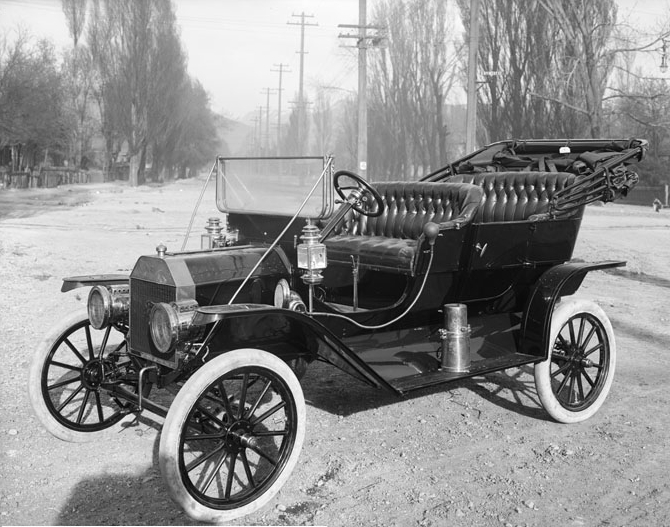
  • Henry Ford once said, “Any customer can have a car painted any colour that he wants so long as it is black.” His first Model Ts, however, did not come in black. They were grey, green, blue, and red.
  • Ford also sold scrap wood that turned into charcoal from processing on the assembly line. Ever hear of Ford's charcoal? How about Kingsford? Named for Ford's relative who selected the new site of the new charcoal plant.

Tuesday, March 22, 2011

Home Run Kings


Barry Bonds maybe the modern home run king, but when I think of sluggers, I think Roger Maris and Babe Ruth. But, should I?

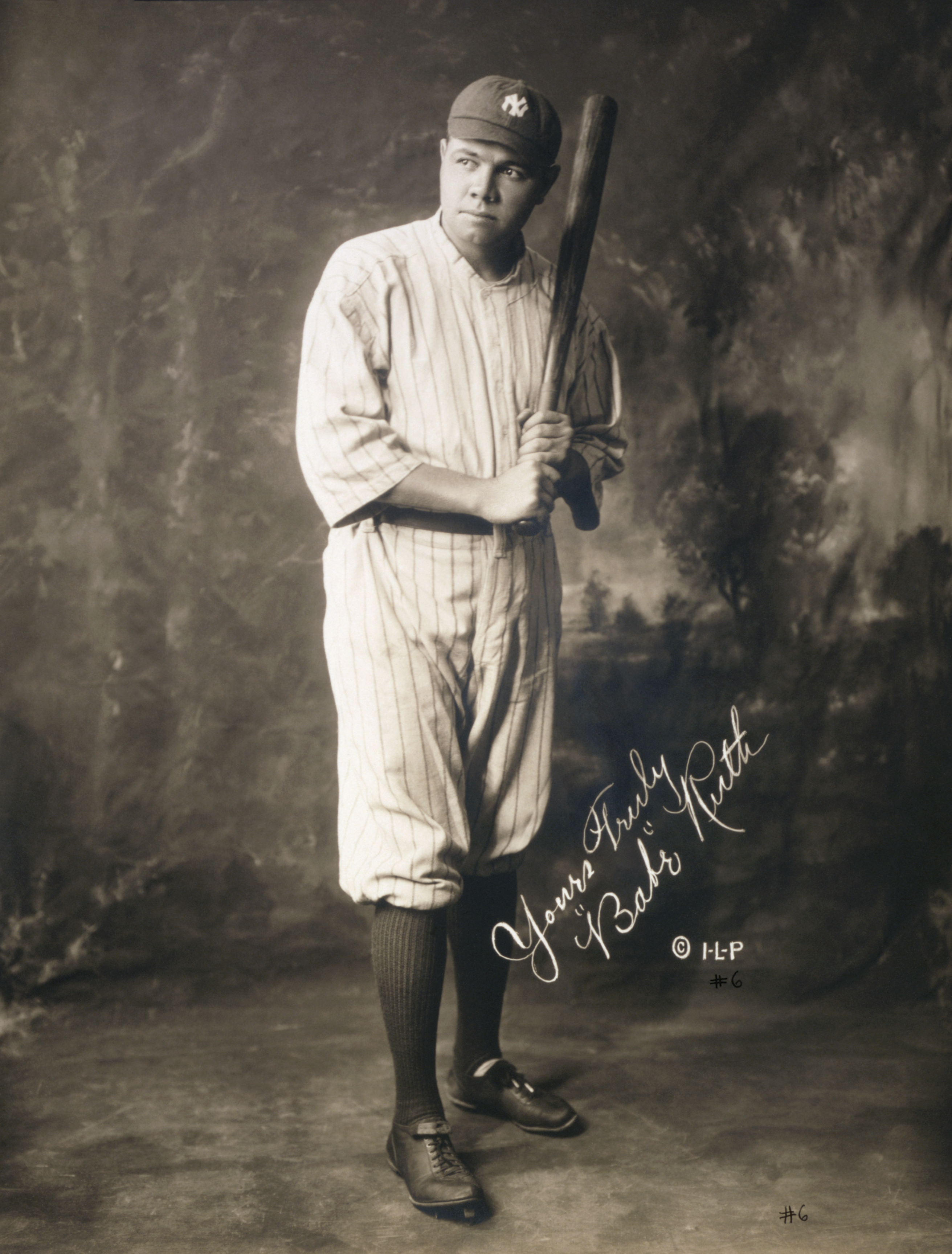
Ruth retired with a record 714 home runs, including 60 in 1927. Not bad, but he may not have even been the best power hitter of his generation. Negro League catcher Josh Gibson hit 69 home runs in 1934 and is credited with hitting "almost 800" in his career by the National Baseball Hall of Fame. Gibson was known as "the black Babe Ruth." Others called Ruth, "the white Josh Gibson."

As great as Ruth and Gibson were, they aren't even close to the all time home run record. Sadaharu Oh played 22 season in Japan and hit a staggering 868 home runs.

All of these guys are in the Baseball Hall of Fame with the exception of Bonds who is not yet eligible and may not make it due to controversy over steroid use. It is interesting to consider competition and debate who is the true sultan of swat. Any conversation must include Ruth, Gibson, Maris, Oh, and Bonds.

Monday, March 14, 2011

FDR's Many Forms of Courage


Franklin Roosevelt saved the country some say twice (Great Depression and WWII). He was elected a record four times and held the position of chief executive longer than anyone else. Throughout his Presidency, however, few people knew he was paralyzed from the waist down.

In August 1921 (9 years before becoming President), Roosevelt came down with a fever. Within a month, he was paralyzed. Roosevelt was a fighter and continued his political career when many would have given up due to public opinion of the early 20th century.

The press treated FDR's disability as taboo. They did not film him getting in and out of cars or trains. When giving speeches, Roosevelt would hold himself up on the podium. He would often gesture with his head instead of his hands. Even the most ruthless political cartoonists, most of whom were aware of FDR's condition, did not portray him in a wheelchair.

FDR was a courageous man and today serves as a role model for those who cannot walk. It is a shame that he had to hide his disability for fear the public would view him as weak. He proved, even in retrospect, that those with disabilities can achieve anything; not only be President but be one of the best Presidents.

Saturday, March 12, 2011

Booth Mummy


On January 13, 1903, a man named David George died. This would not be very important other than, upon his death bed, George claimed to be John Wilkes Booth. Some of the evidence matched. They looked the same. George was the same age as Booth. He had a long healed broken leg just above the ankle. He was considered a pretty darn good actor. So just to be sure, George was mummified.

The mummy went on display for a while, but when interest faded, it was sold to a Memphis lawyer who of course used it as a sideshow attraction. The mummy quickly began causing trouble. It was bought and sold numerous times. Each time, a curse seemed to bankrupt or physically harm the owner.

But was it Booth? The short answer: no. Booth's body was released to his family after an extensive investigation. Both the government and family believed they had their man.

Wednesday, February 16, 2011

The Battle of Los Angeles


The events of the night of February 24th, 1942 were quite strange even for Hollywood. Early on the 24th, the Navy released a statement that an attack on Los Angeles by the Japanese was possible. Artillery units were put on high alert as night fell. An unusual number of lights were in the sky that night making for an even more tenuous situation. Things returned to normal until around 2:15. Reports came in of enemy planes flying west of L.A. A red light was spotted and fire upon. Artillery units followed shooting at lights in the night sky. Despite all the fire, no aircraft either fired back or was hit.

The problem? There were no planes or a battle over Los Angeles. The military was still reeling from the attack on Pearl Harbor and was a bit too quick on the trigger. While UFO enthusiasts will claim the army was shooting at aliens, the truth lies with the first red light. The artillery officers that night commented that what they were firing at seemed to be too slow to be a plane; that's mostly because they were firing at weather balloons. The Japanese released a statement years later saying that, while they did launch planes from submarines near the American coast during the war, it did not take place near Los Angeles or on the night in question.

Thursday, February 3, 2011

More than a pretty face


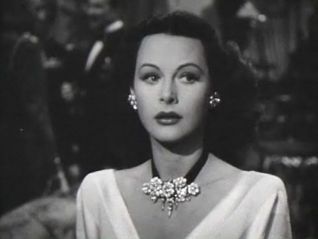
Hedy Lamarr was one of the most famous actresses of the Golden Age of Hollywood. She starred in 18 films during the 1940's. A little known fact about Lamarr, however, is that she played a significant role in the remote control of everything from torpedoes to wifi.

Early in her acting career, Lamarr married an Austrian arms manufacturer name Friedrich Mandl. Mandl did not approve of Lamarr's acting career and would often take her to business meetings with him. From these meetings, the mathematically gifted Hedy learned about military technology.

In 1941, she paired with German composer George Antheil to create a wireless system of musical instruments. The radio technology they developed could also be used by the military to remotely control torpedoes. Their work was not received with great attention until the advent of later technologies such as cordless phones and wireless internet connection. The so called frequency hopping makes the connection you're on right now more secure.

Thursday, January 27, 2011

Lincoln-Kennedy Disconnections


Part Two:
Yesterday's post was fun, wasn't it? Well, not let's blow it up. Here's my suggestion for a lesson. Start with yesterday's information, discuss, and then add today's. Your students might be surprised.

Lincoln: elected to Congress in 1846
Kennedy: elected to Congress in 1946
True, but their climbs to Congress could not have been more different. Lincoln struggled at every election. Kennedy rose quite easily.

Lincoln: shot on a Friday
Kennedy: shot on a Friday
1 in 7 chance. I wouldn't bet on those odds, but it still seems pretty circumstantial.

Lincoln: successor was Andrew Johnson born in 1808
Kennedy: successor was Lyndon Johnson born in 1908
Coincidence but not that startling. Most politicians reach their prime in the 50-70 age range. Johnson is also a very common last name.

Lincoln: John Wilkes Booth- 3 names, 15 letters
Kennedy: Lee Harvey Oswald- 3 names, 15 letters
Oswald was generally known as "Lee Oswald" before the murder.

Coincidences I left out because they are flat wrong:
Both were assassinated by Southerners.- Booth was a Southern sympathizer but was not actually born in a Southern state.

Both were succeeded by Southerners- You want to be President? You better have a VP that represents a section of the country that you do not.

Lincoln's Kennedy secretary, Kennedy's Lincoln secretary- Kennedy's secretary's name was indeed Lincoln. There is no proof that Lincoln had a secretary named Kennedy.

Both losing children- Much different circumstances. Lincoln's son died of TB at four years old. Kennedy's son was premature and died at two days old.

Booth was born in 1839, Oswald in 1939- Wrong. Booth was born in 1838.

Wednesday, January 26, 2011

Lincoln-Kennedy Connections

Part One:
This information can be found all over the web. There is, however, a lot of junk out there. I'm sticking to the facts.

Lincoln: elected to Congress in 1846
Kennedy: elected to Congress in 1946

Lincoln: elected President in 1860
Kennedy: elected President in 1960

Lincoln: shot on a Friday
Kennedy: shot on a Friday

Lincoln: shot at Ford's Theater
Kennedy: shot in a Lincoln, made by Ford

Lincoln: John Wilkes Booth- 3 names, 15 letters
Kennedy: Lee Harvey Oswald- 3 names, 15 letters

Lincoln: Booth killed before a trial
Kennedy: Oswald killed before a trial

Lincoln: assassin attacked in a theater, escaped to a storage facility (tobacco barn)
Kennedy: assassin attacked from a storage facility (book depository), escaped to a theater

Lincoln: successor was Andrew Johnson born in 1808
Kennedy: successor was Lyndon Johnson born in 1908


This is all very strange and a bit eerie. There are more connections, but I don't really find them relevant. For instance, both Mrs. Lincoln and Mrs. Kennedy lost children as first ladies. There's a rumor that Lincoln's secretary's name was Kennedy and Kennedy's was Lincoln, but that's unsubstantiated. This is interesting food for thought and could be a great classroom discussion.

Friday, January 21, 2011

Convict to Contract to Silverscreen


David Marshall Williams was a railroad man. The problem: he ran an illegal distillery on the side. During a raid on his still in 1921, a deputy sheriff was shot and killed. Williams's trial resulted in a hung jury, but he decided to plead guilty to a lesser charge of second degree murder. He was sentenced to 20 to 30 years behind bars.

The story really begins here. Williams had the uncanny ability to machine parts for guards' guns out of scrap metal and car parts. He drew diagrams of guns he would like to build and eventually was allow to build a few while in prison. His family and the widow of the deputy involved pushed for Williams to be released. In 1931, he went free.

Williams took some time to perfect his work and eventually landed a contract with the War Department to outfit many of the military's rifles with his floating chamber technology. Williams later caught on with Winchester where he designed his most famous gun, the M1 Carbine.

In 1952, Hollywood came calling when MGM decided to make a movie about Williams's life. The title character, played by Jimmy Stewart mind you, was Carbine Williams.

Thursday, January 20, 2011

Let me see your face


Lyndon Johnson was an iconic figure. There's the picture of him holding the beagle by the ears, a famous picture of a distraught LBJ listening to news from Vietnam, and did you ever here the phone call of him ordering pants? It's at least PG-13. Little known until recently, however, is the story of how we almost lost a second President in as many days.

In the book and subsequent documentary The Kennedy Detail, Secret Service Agent Gerald Blaine explained how he almost shot the new President just hours after Kennedy was killed. Blaine was assigned to protect Johnson's Washington home and was standing guard the night after Kennedy had been assassinated. He heard a noise. Blaine cocked his Thompson submachine gun sure that the noise would stop the potential intruder. He was surprised to hear footsteps still coming toward him. Blaine then put the gun to his shoulder and yelled for the intruder to show himself shouting, "let me see your face, you b####rd" (edited, he didn't say number sign). Just then, the new President of the United States turned the corner and reportedly turned quite pale. LBJ could not sleep and was walking about the house. Blaine said he struggled to compose himself after that. He had nearly killed the President.

Tuesday, January 18, 2011

The Search for Planet X


Clyde Tombaugh was an unassuming farm boy of the early 20th century. He had not attended college and worked with his family. Clyde, however, was fascinated by the night sky. In 1926, he built a few telescopes with mirrors he ground himself. He worked tirelessly on drawings of Jupiter and Mars. When completed in 1929, he sent these drawings to the Lowell Observatory in Flagstaff, AZ. Tombaugh was then offered a job.

Clyde went to college while working for Lowell and received both a bachelors and masters degree in astronomy. What he is most famous for occurred in 1930. Tombaugh was assigned the duty of searching for a "trans-Neptunian" planet; the so called, "Planet X." Tombaugh took pictures of the same section of sky night after night and noticed one body that seemed to move while the others (stars) were stationary. He also determined the light was beyond Neptune. Tombaugh had discovered Planet X.

What to call the new planet? Planet X was not very interesting. There were many suggestions, but the winning entry came from a 11 year old girl. Her suggestion was Pluto. The astronomers thought Pluto was fitting as it was the name of the Roman God of the Underworld who could make himself invisible. The owner of the Lowell Observatory, Percival Lowell, liked the name as PL were his initials. On May 1, 1930, Pluto was dubbed the 9th planet.

Note for my son, Ryter: On August 24, 2006, Pluto was reclassified as a dwarf planet or as Ryter says, "Pluto got kicked out of the galaxy." Even at the age of 3, he has decided that it is his mission in life to allow Pluto back in.

Saturday, January 15, 2011

3.4% of the Vote from Prison


Even today, one of the few names associated with Socialism in America is Eugene Debs. Debs was an Indiana Congressman most famous for organizing labor unions. He is connected to one of the most famous strikes in American history; the Pullman Strike of 1894 which had to be broken up by the U.S. Army.

Debs continued to fight for labor unions and joined the American Socialist Party. He was an outspoken critic of World War I and Woodrow Wilson's administration. On June 30, 1918, he was arrested on 10 counts of sedition. Wilson called him, "a traitor to his country." Debs spoke on his own behalf at his criminal trial but was found guilty and sentenced to 10 years in prison.

Debs ran for President on the Socialist ticket in 1920 while incarcerated in an Atlanta prison. He received 913, 664 write in votes (3.4% of the vote). He later requested clemency which Wilson, of course, rejected. In 1921, new President Warren Harding released Debs and invited him to the White House the day after his release. Harding welcomed Debs saying, "Well, I have heard so damned much about you, Mr. Debs, that I am glad to meet you personally."

Debs's health deteriorated over the next few years. He was admitted to a mental health facility where he died in 1926.

Atlanta prison to the White House in one day. Not bad.

Thursday, January 6, 2011

King of the Bootleggers


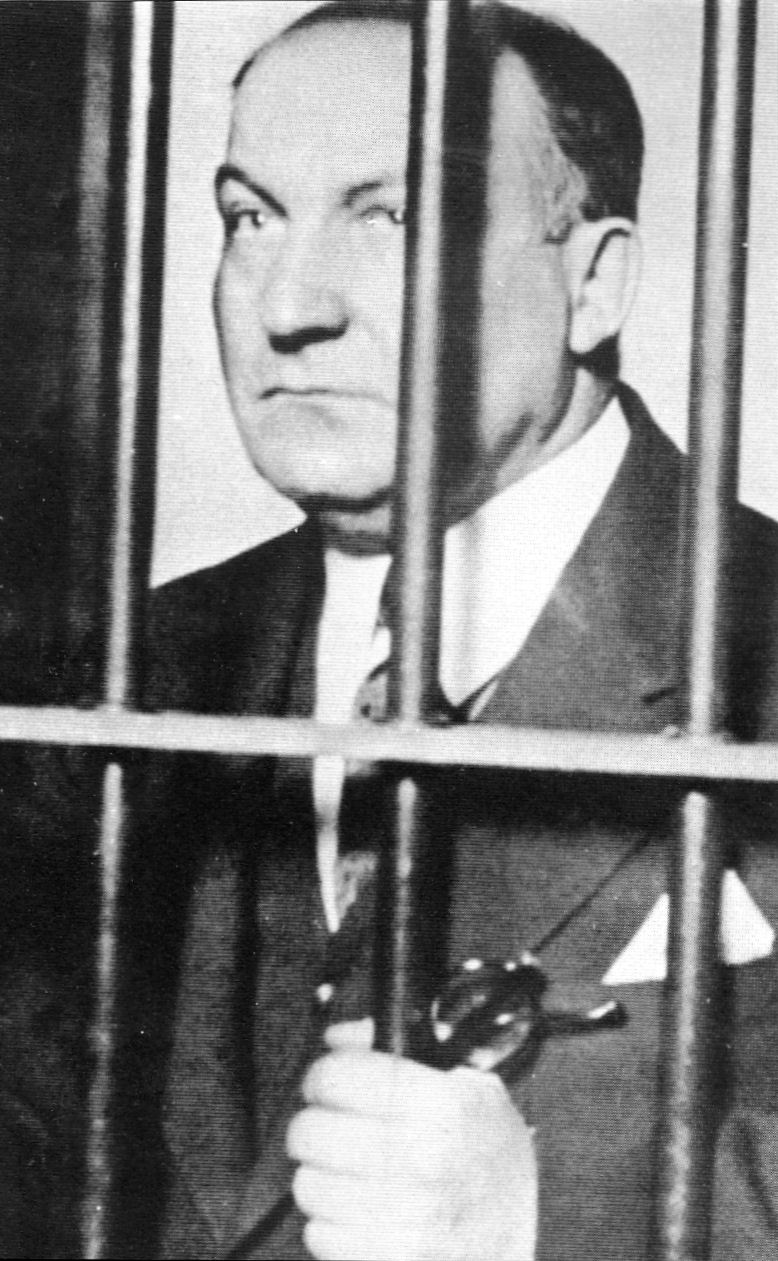
What can we say about George Remus? He was a young entrepreneur, a pharmacist, a lawyer, the so called king of the bootleggers, an accused murderer, an insane asylum patient... yeah, this guy was made for Stories of America.

George Remus came to Chicago as a young child with his parents around the turn of the 20th century. His father could not work, so a 14 year old George took a job at a local pharmacy. By age 19, he owned it. Before long, Remus tired of business and took up law.

By 1920, Remus had established himself as a pretty good criminal defense lawyer. 1920 is also the year Prohibition was implemented. George couldn't help but notice that many of his clients were getting very rich and fast. So, Remus moved to Cincinnati where many legal distilleries were still making alcohol for medicinal purpose. He used his pharmacist's license to buy legal alcohol and he was in business. A few associates "stormed" his warehouse, "stole" his alcohol, turned it into illegal Hooch, and sent it to the streets of Cincinnati. Did the get rich quick scheme work? Well, he threw a New Year's Eve party in 1922 for 100 of the most powerful couples in Cincinnati. Each husband left with a diamond watch. Each wife left with a new car.

As was the case with many bootleggers, Rumus eventually landed in jail. His wife couldn't wait for him and began dating a federal Prohibition agent of all people. Upon his release, Remus sought out his wife and promptly shot her. Not a problem for George Remus, he was a lawyer after all. He defended himself with a plea of temporary insanity. The jury did not want to send a Cincinnati legend to the clink for life, so they returned with an innocent verdict in just under 20 minutes. Remus' insanity plea did, however, land him in an insane asylum. Upon leaving the asylum, Remus moved to Kentucky and lived out the rest of his life without incident.

And oh yeah, the king of the bootleggers apparently didn't drink.

Monday, January 3, 2011

World Wide What?


The internet was invented by the U.S. government (sorry, Al Gore although maybe you get some credit). It probably would not be as handy as it is today if it weren't for one man; Tim Berners-Lee.

In the early 1980's, Berners-Lee was looking for a way to keep better track of his documents. He created a program called Enquire which allowed him to share his files more efficiently. Big deal, right? Berners-Lee didn't think it was either. Ten years later, however, Tim decided to apply the Enquire principle to a number of computers. Lo and behold, the internet as we know it was born.

What to call this feat? A few colleagues suggested "that hypertext thing." No. "The Mesh" was considered. No. "The Information Mine" was close, but the TIM acronym would be a little egotistical. Berners-Lee decided on something more catchy; the world wide web.

For more information, I suggest:
The Greatest Stories Never Told by Rick Beyer

Friday, December 31, 2010

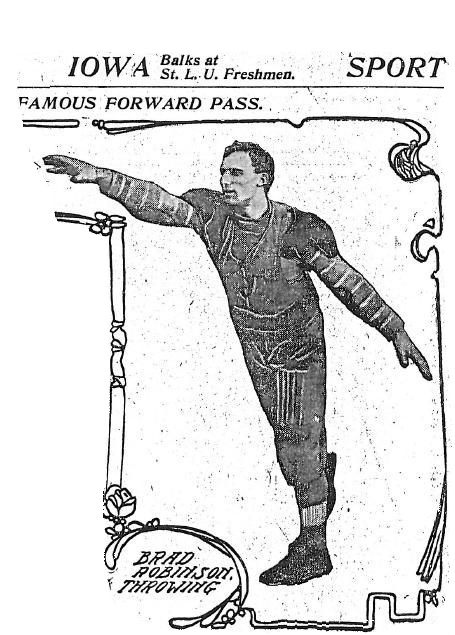
T.R. says, College Football not Bully


New Year's Day has become synonymous with the college bowl season. Did you know the sport was almost outlawed before it every took off?

18 college players died in 1905. The game was simply too rough and the quintessential Rough Rider was going to fix it. Teddy Roosevelt saw a lot of potential in the game of football. It built comradery, team work, and was pretty fun to watch. It just needed to be more safe.

In 1905, T.R. invited representatives from Harvard, Yale, and Princeton (yes, college football started in the Ivy League) to the White House to discuss setting up some new rules. As a result of this meeting, the American Football Rules Committee was formed the next year. This committee made the game more safe and enjoyable by instituting a few simple rules.
  • the introduction of the forward pass
  • first downs of 10 yards as opposed to 5
  • outlawing mass formations and gang tackling
Later introductions such as pads, helmets, and facemasks didn't hurt either.

Thursday, December 30, 2010

Pappy O'Daniel


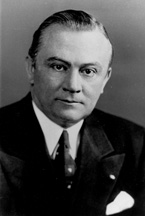
Wilbert Lee O'Daniel is the only man to ever beat Lyndon Johnson in a general election.
Wow! He must have been a shrewd career politician.
Actually, he sold biscuits for a living.

O'Daniel was born in Ohio but grew up in Kansas. He moved to Fort Worth, TX in 1925 when he took a job at the Burrus Mills Flour Company. Eventually, he took over the radio advertising department for the company where he showed off his musical talents. For ten years, O'Daniel entertained the masses at 12:30 sharp singing the virtues of flour and the Bible. His catchphrase, "pass the biscuits, Pappy," earned him his famous nickname.

In 1938, Pappy ran for governor and won. In 1941, he ran against a young up and comer named Lyndon Johnson for Senate and won again. From there, things got tricky for Pappy. He was a rather ineffective Senator, opposed FDR pretty much every chance he got, didn't run for re-election in 1948, and lost two bids to regain the governorship of Texas. Still not a bad run for a radio personality.